
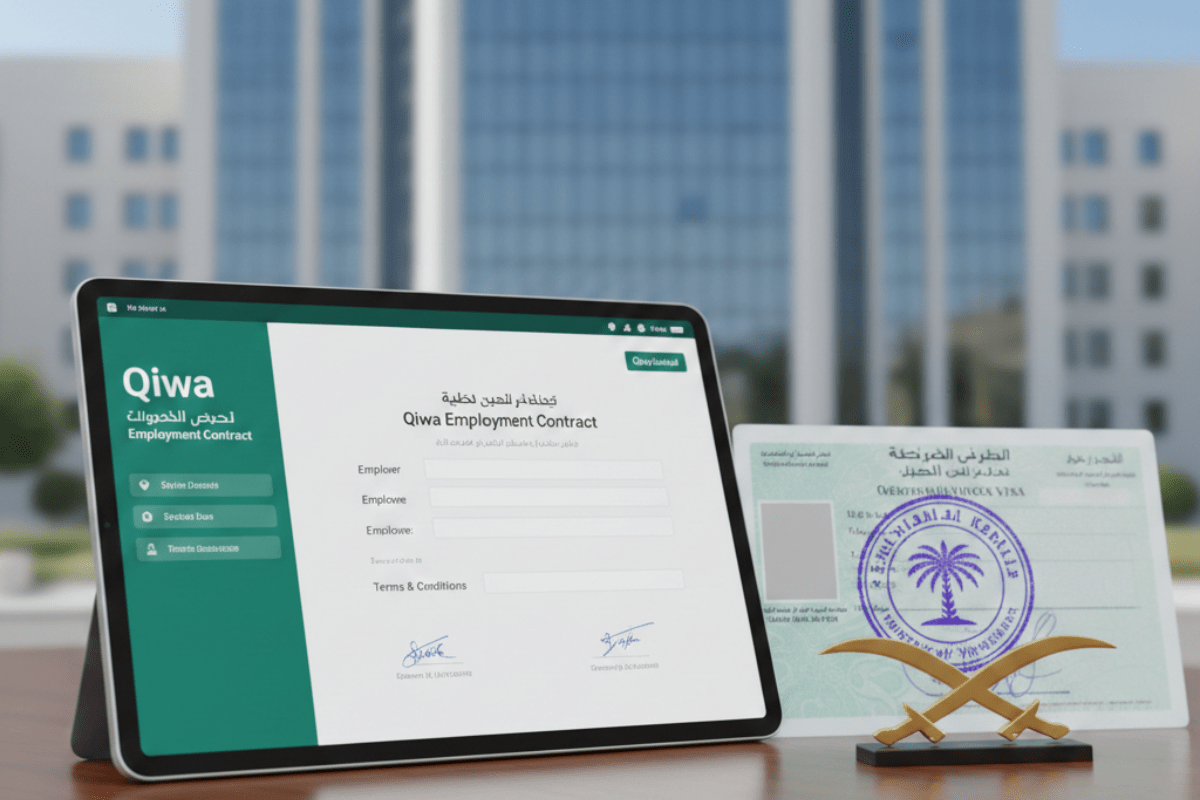
Recent months have brought significant changes to the Qiwa platform, making it more than just a digital HR tool, it’s now a strategic compliance engine that directly affects how work visas are processed, approved, and upheld for foreign professionals entering Saudi Arabia. From tighter job title controls to a unified employment contract system, these developments are reshaping how employers, employees, and global mobility teams approach consular work visas in 2026.
The Strategic Role of Qiwa in 2026
Qiwa, operated by the Ministry of Human Resources and Social Development (MHRSD), serves as the Kingdom’s unified labour management platform. It governs employment contracts, work permits, Saudization compliance, and workforce classification. Recent reforms have strengthened its authority and legal impact.
Most notably, the introduction of the Unified Qiwa Employment Contract has standardised contract formatting and enhanced enforceability. Contracts registered on Qiwa now align with judicial systems and digital enforcement mechanisms, meaning they carry greater legal weight than ever before.
For visa processing, this development is significant. Saudi consular authorities increasingly rely on Qiwa-authenticated data as proof of lawful employment and regulatory compliance before issuing a work visa stamp.
Key Recent Changes Affecting Work Visa Processing
1. Unified, Digitally Enforceable Contracts
The new Qiwa contract format requires more detailed disclosure of compensation structure, allowances, and contractual terms. Employers must ensure that contract data matches payroll and wage protection systems.
Any inconsistencies between the Qiwa contract and supporting documents can trigger delays at the consular stage.
2. Stricter Job Title & Classification Controls
Saudi authorities have introduced tighter oversight around occupation codes and senior role classifications. Employers must align job titles with the Saudi Standard Classification of Occupations (SSCO) and ensure skill-tier accuracy when generating work permits.
Incorrect classification can block permit issuance within Qiwa — which in turn prevents consular work visa processing from progressing.
3. Enhanced Compliance Integration
Qiwa now operates in closer coordination with payroll systems, Saudization monitoring, and employer eligibility checks. Before a work permit is issued, the platform verifies:
Saudization (Nitaqat) status
Valid commercial registration
Wage compliance records
Available foreign worker quotas
If any of these elements fall short, the Qiwa system may restrict further processing — directly impacting visa timelines.
How Qiwa Supports Consular Visa Processing
The Saudi work visa process follows a straightforward digital flow.
Employers first issue and approve the employment contract in Qiwa. After compliance clearance, a work permit is issued. This permit supports the visa application at the Saudi Embassy or Consulate.
Once the visa is stamped, the employee travels to Saudi Arabia to complete medical formalities and obtain their residency permit.
Qiwa acts as a control system throughout the process. Errors in contract details or employer compliance can delay or stop the visa from moving forward.
How Pangea Worldwide Supports Employers
At Pangea Worldwide, we work closely with HR teams, legal departments, and mobility managers to ensure that Qiwa contracts are properly structured, compliant, and aligned with current regulatory standards.
Our approach integrates labour compliance, visa coordination, and consular processing into a unified workflow. By managing these elements cohesively, we help organisations deploy foreign talent into Saudi Arabia with clarity, control, and reduced administrative risk.