
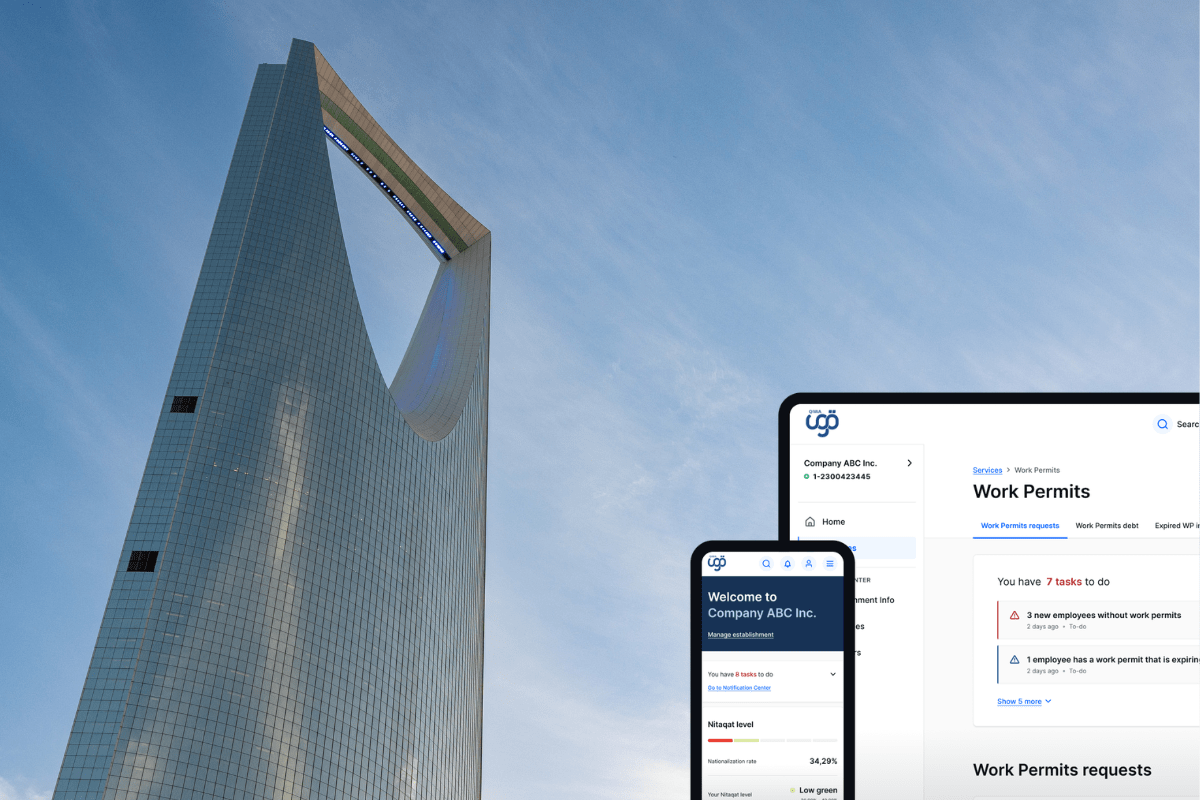
In 2026, the Kingdom of Saudi Arabia introduced a series of regulatory adjustments that are reshaping cross‑border workforce mobility and visa processing. At the center of these developments is the Qiwa platform, the government’s unified labor and immigration ecosystem designed to digitalize workforce compliance. Recent restrictions implemented through Qiwa — particularly those tied to Saudization mandates — are affecting how companies plan, process, and secure work visas for expatriate employees.
For organizations operating in the Kingdom, understanding these changes is no longer just an HR operational concern but a strategic imperative with implications for compliance, workforce planning, and competitive positioning.
Qiwa as a Regulatory Hub
Qiwa has become the central platform for managing workforce and visa processes in Saudi Arabia. It connects labor data, immigration approvals, and compliance requirements in one system.
This means:
- Visa eligibility is now checked in real time
- Job titles must align with approved classifications
- Non-compliant applications can be blocked automatically
As a result, businesses must ensure accuracy and compliance before submitting any visa request.
Recent Qiwa Restrictions: The Administrative Assistant Case
Following Ministerial Decision No. 132249, issued by the Ministry of Human Resources and Social Development, certain roles — including Administrative Assistant — are now subject to 100% Saudization.
From April 5, 2026, Qiwa has already started enforcing this by:
- Blocking new visa applications under this title
- Preventing profession changes to this role for expatriates
- Making renewals more difficult as the deadline approaches
With full enforcement from October 4, 2026, this role is no longer a viable option for expatriate hiring.
Impact on Visa Processing Workflows
1. More Visa Rejections
Applications under restricted job titles are now automatically blocked.
Impact: Incorrect titles can lead to immediate rejection.
2. More Careful Job Title Selection
Companies must choose compliant job titles that match the role.
Impact: Misaligned titles can delay approvals.
3. Longer Processing Times
Rejections and reapplications are slowing down the process.
Impact: Hiring and onboarding may take longer.
4. Higher Compliance Risk
Non-compliance can lead to penalties and operational restrictions.
Impact: Visa processing now directly affects overall business compliance.
Visa Processing Is Now a Strategic Risk Vector
Qiwa restrictions are changing how businesses hire and operate in Saudi Arabia.
Visa processing is no longer just administrative — it directly affects timelines, compliance, and business continuity.
Companies that act early and align with these changes will avoid disruption and stay competitive in the Kingdom.